
Should you use a whisky decanter?
While whisky decanters aren’t as quite popular as they once were, they’ve never gone out of fashion. You see them on bar shelves, drink trolleys and in home bars around the world.
But what purpose do they actually serve? And should you be using one?
What is a whisky decanter?
A whisky decanter is a vessel used to store and serve whisky. Often made from glass or crystal and fitted with a stopper, it holds the spirit after it’s been poured from its original bottle.
The word decanter comes from the verb decant, which means to “gradually pour liquid from one container into another, typically in order to separate out sediment”. This process has been used for centuries for drinks such as wine, port, brandy and whisky.
Historically, decanters were a practical household item. Before drinks were widely sold in branded bottles, wine and spirits were often brought home in larger containers and then transferred into smaller vessels for storage and serving. Over time, these vessels became more decorative, and decanters developed into a familiar feature of dining tables and drinks cabinets.
Today, decanters are still used for a variety of drinks, but the reason for using one can vary depending on what is being served. In particular, the role of a decanter is quite different for wine compared with whisky.
The benefits of using a decanter for whisky
Although whisky doesn’t benefit from being decanted in the same way as wine, there are still a few reasons to use one.
To remove sediment
Some whiskies, like Lagg, are non-chill filtered, which means they retain more of their natural oils, fatty acids and flavour compounds. This approach helps preserve texture and character, but it can also give it a hazy appearance.
Sediment can also come from wood compounds such as tannins, lignin, or ellagic acid that precipitate during long aging, especially in older or heavily sherried whiskies. Occasionally, char or mineral fragments from the cask or water can appear as tiny dark specks. Even changes in temperature during storage or transport can affect how certain natural compounds remain in solution, occasionally resulting in a light haze or fine cloudiness.
This sediment is perfectly normal and safe to drink. But for those who prefer a clear pour, carefully decanting the whisky when the sediment is at the bottom of the bottle can leave the particles behind while preserving all the flavour.
Presentation
Often we buy things just because they look good. And whisky decanters look good.
Think of Don Draper in Mad Men. Tony Montana in Scarface. Deckard in Blade Runner. James Bond. Chances are you can picture at least one of them right now, pouring a dram from a decanter; calm, unhurried and effortlessly cool.
A clear, stylish decanter showcases the amber colour of whisky and adds a splash of sophistication to a drinks cabinet or bar shelf.
It can also enhance the experience of serving whisky to guests, giving a slightly more refined feel than pouring straight from the bottle.
Aeration
One of the most common reasons to use a decanter is to allow the liquid to interact with the air. Now, you’d most commonly associate this with wine, where it makes a noticeable difference. Wine is typically bottled with low levels of oxygen to prevent premature aging. When decanted (into a glass or a decanter), oxygen exposure softens tannins and releases aromas, enhancing both taste and smell.
The need for aeration is more divisive in the whisky community. By the time it reaches the bottle, whisky has already matured for years in oak casks and interacted with oxygen along the way. So transferring whisky into a decanter will not dramatically transform its flavour.
That said, many whisky drinkers find that giving whisky a little time to breathe can open up subtle aromas and evaporate volatile compounds. One way to achieve this is by transferring it to a decanter, but you can also swirl the whisky gently in your glass for a few minutes, or add a drop or two of water.
When you should avoid using a decanter
While whisky decanters can be a stylish addition to a home bar, they are not suitable for long-term storage.
Standard bottles are airtight, UV-protected and made from thick glass to limit evaporation and exposure to light. Decanters, even high-quality crystal ones, don’t offer the same protection.
Over time, whisky in a decanter is vulnerable to:
- Light exposure – UV rays can degrade the colour and flavour of the whisky.
- Heat fluctuations – Whisky stored in warm or variable temperatures can age unnaturally, leading to off-notes.
- Oxygen – Even a well-fitting stopper allows more air than a sealed bottle, accelerating oxidation.
- Temperature changes – Moving a decanter from warm to cold environments repeatedly can disturb the delicate balance of oils, fatty acids, and esters.
Because of these factors, it’s best to use a decanter when you plan to drink it within a few months to a year. And never use a decanter that doesn’t have a stopper. Prolonged exposure to air will reduce the strength of the whisky and gradually dull its flavour.
How to choose a whisky decanter
Whisky decanters come in an enormous range of shapes and designs: classic cut crystal, modern and minimalist, novelty themed barrels or ships…
We won’t get into aesthetics here, as it’s all a matter of personal taste, but we will cover some practical details to consider.
Choose lead-free glass or crystal
It’s best to choose a decanter made from lead-free glass or crystal. While traditional lead crystal decanters are generally safe, they can leach small amounts of lead into the liquid if stored for long periods.
It should have a tight stopper
A stopper isn’t just decorative. As we’ve already mentioned, a tight-fitting stopper helps reduce evaporation and limits the whisky’s exposure to air, preserving its aroma and flavour over weeks or months. Some decanters have stoppers with rubber or silicone rings to improve the seal, which can lengthen the storage life in the decanter.
Adequate capacity (enough to hold a full-size bottle)
Most standard whisky bottles contain 700ml, so you’ll want a decanter that will hold at least that much. Whisky decanters will typically hold 750ml of liquid - enough for a bottle, while leaving enough space for aeration and to reduce the risk of spills.
Shape
Decanters come in many shapes - square, round, faceted - and the size of the neck (the opening) dictates how easy it is to pour the whisky, and also how easy it is to fill up from a bottle.
Wide-necked decanters are easier to clean and fill, while you may have to be more careful with a narrower neck.
Filling your decanter
If you decide to use a decanter, you’ll need something to fill it with. And we know just the thing…
Lagg Whiskies
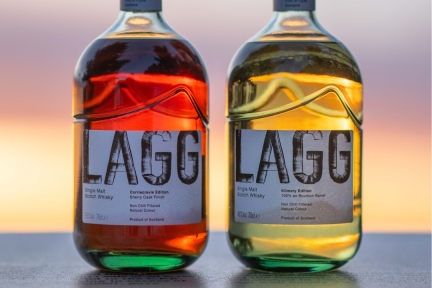
Our peated, modern and characterful single malt scotch embodies the spirit of the Isle of Arran.
Explore Lagg WhiskyRelated content
What is single malt Scotch whisky?
What makes a whisky a single malt, and how is it different from other whiskies?